Posted July 2026 | Updated September 8, 2026 | By Eric Engelbert | Updated as the project moves through the approval process.
Ground Has Been Broken at the Old Fairview Site
If you have driven past 2501 Harbor Boulevard in Costa Mesa recently, you may have noticed a large crane and fresh ground disturbance along the western edge of the old Fairview Developmental Center property. Construction is underway on the Cal OES Emergency Operations Center in the southwest corner of the site, and demolition of the remaining hospital buildings is progressing on the housing portion. This is one of the largest land redevelopment projects in Orange County history, and it is now moving from planning to reality.
The Fairview Developmental Center occupied a prime piece of Costa Mesa for more than 60 years. Now, roughly 100 acres of that land is set to become a new mixed-income residential neighborhood. The Planning Commission voted 4-2 on August 10, 2026 to forward the Specific Plan to the City Council, where a hearing is tentatively set for September 15, 2026. A master developer has not yet applied for the site, which has raised questions about market interest. When it is complete, this project will add thousands of housing units to a city that has been under intense state pressure to produce more homes.
This blog covers the development factually: what the site is, who fought over its future, what is being planned, who will build it, what the golf course situation is, and what happens next. If you want to read more about the golf course pressure angle specifically, we have a companion piece linked at the bottom of this page. 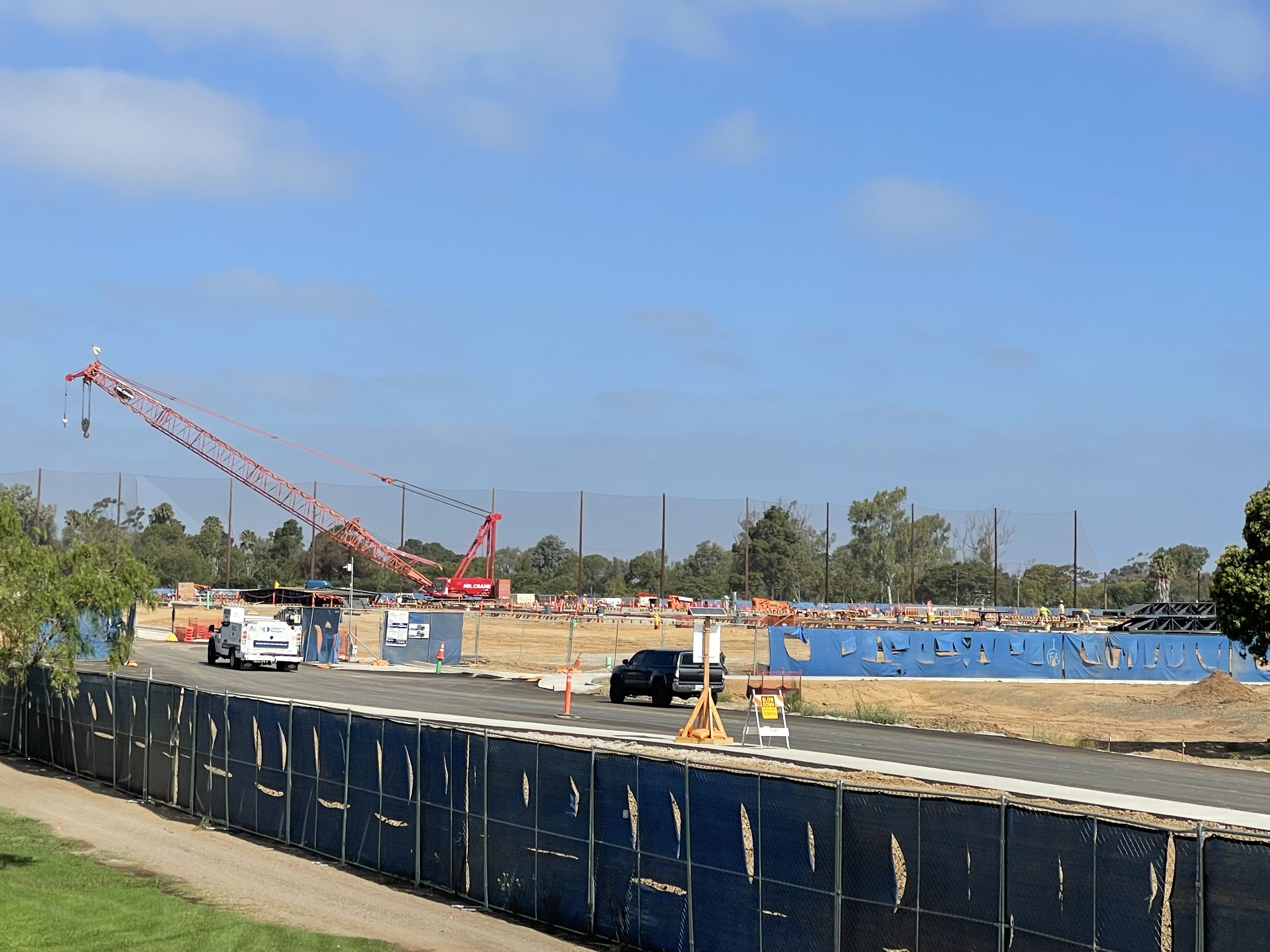
What Was the Fairview Developmental Center?
Fairview State Hospital opened in 1959 on 752 acres in Costa Mesa to house individuals with developmental disabilities. At its peak, it was one of the largest state-operated facilities of its kind in California. In 1979, much of the original acreage was transferred to the City of Costa Mesa as the state began shifting to community-based group homes. The campus shrank considerably, eventually settling at approximately 121 acres along Harbor Boulevard, adjacent to the Costa Mesa Municipal Golf Course.
The California Legislature approved a closure plan for Fairview in 2016. The final residents were transitioned out of the facility by October 2022. Senate Bill 188, signed by Governor Newsom in 2022, formalized the partnership between the State Department of Developmental Services, the State Department of General Services, and the City of Costa Mesa to determine what would happen to the property next. Housing was identified as the priority use under the agreement, with any housing required to include affordable units and priority for deed-restricted housing for individuals with developmental disabilities.
| Address | 2501 Harbor Blvd, Costa Mesa |
|---|---|
| Total Site | Approximately 121 acres |
| Housing Portion | Approximately 100 acres (after Cal OES allocation) |
| Cal OES Portion | 15 acres (SW corner), groundbreaking October 2025 |
| Original Opening | 1959 |
| Original Acreage | 752 acres |
| Closure Approved | 2016 (California Legislature) |
| Last Residents Out | October 2022 |
The Fight Over What the Site Would Become
Before housing became the settled direction, Costa Mesa had to push back against a competing proposal. The City of San Clemente and other advocates were pushing for the Fairview site to be converted into a large regional homeless shelter and services campus. Costa Mesa's elected officials and city staff were firmly opposed and spent significant time and effort lobbying Sacramento to keep the site designated for housing.
City Manager Lori Ann Farrell Harrison confirmed the city's active lobbying efforts. Former Mayor and then-Orange County Supervisor Katrina Foley made personal trips to Sacramento to make the case that Costa Mesa's housing needs and its state Housing Element obligations made a residential community the right use for the property. Governor Newsom ultimately sided with Costa Mesa's position and put a stop to the homeless shelter proposal.
The result is the current plan: housing as the primary use, with a mix of income levels required by state law and the State-City agreement. The City's 6th Cycle Housing Element, which Costa Mesa submitted to the state to meet its Regional Housing Needs Assessment (RHNA) obligations, lists Fairview as a key housing opportunity site and counts 2,300 units there toward the city's production targets.
The Development Plan: What Is Being Proposed
The City of Costa Mesa has been developing a Specific Plan for the Fairview site since September 2023, led by city planning staff and the consulting firm Placeworks. The plan establishes the land use rules, density limits, design standards, mobility framework, and infrastructure requirements that any future developer must follow. A Public Hearing Draft was released in July 2026, and a Planning Commission study session is scheduled for July 27, 2026. City Council adoption is targeted for late 2026.
The base plan calls for 2,300 housing units at a mix of income levels. Under California's State Density Bonus Law, however, a developer who includes a certain percentage of affordable units can request additional density beyond what the Specific Plan allows, potentially pushing the total to 3,500 units or more. This is not a hypothetical: the financial analysis for the project suggests the development does not become economically viable until roughly 3,500 units are built, because the developer receives the land for essentially no cost in exchange for absorbing all site remediation expenses.
The plan also includes up to 35,000 square feet of neighborhood-serving retail and commercial space, such as restaurants, coffee shops, fitness studios, and childcare. A senior housing tower of up to 18 stories is planned near the western edge of the site. The full buildout is expected to take 18 to 20 years.
| Base Housing Units | 2,300 (per Housing Element plan) |
|---|---|
| Potential with Density Bonus | 3,500 to 4,000+ |
| Income Mix (base plan) | 575 very low / 345 low / 690 moderate / 690 above moderate |
| Commercial Space | Up to 35,000 SF (retail, restaurants, childcare) |
| Max Building Height | Up to 18 stories (senior tower, western edge) |
| Buildout Timeline | 18 to 20 years |
| Specific Plan Adoption | Targeted late 2026 |
In addition to the primary housing, two state bills allow for specialized uses within the site. SB 82 permits up to 20 acres for mixed-income housing for people with developmental disabilities. SB 138 authorizes up to three complex needs homes for individuals with developmental disabilities, up to 15 residents total, with the state budgeting $10.5 million for their construction.
Who Will Build It? Master Developer Still to Be Selected
As of September 2026, no master developer has applied for the Fairview housing site. The State Department of General Services opened the application process in March 2026. At the August 10 Planning Commission hearing, Principal Planner Melinda Dacey stated publicly that to her knowledge no application had been submitted as of that date. That was more than five months after the process opened. The absence of any applicant drew significant attention from commissioners and observers. The reasons are not confirmed, but likely candidates include the ongoing legal dispute between the State and the City over housing compliance, the financial difficulty of the deal structure, and uncertainty about who controls the final development agreement terms.
The structure of the deal is unusual compared to a typical land sale. The developer is expected to receive the land for effectively no money, or possibly a nominal amount such as one dollar, or through a long-term ground lease of up to 99 years. In exchange, the developer takes on full responsibility for cleaning up the site and all infrastructure costs. Because contamination on the property is concentrated primarily in the former maintenance yard and central kitchen areas, cleanup costs are a significant financial variable. The most recent detailed environmental study was never finalized, which means some uncertainty remains about the total cost of remediation.
Once the State selects a master developer, that developer will be required to build according to the Specific Plan adopted by Costa Mesa's City Council. The master developer may sell individual parcels to sub-developers over the life of the project, but all of those parcels must comply with the plan's standards. Two separate development agreements will be required: one between the State and the master developer, and one between the City and the master developer.
The Golf Course: The Road, Merrimac Way, and What the August Hearing Revealed
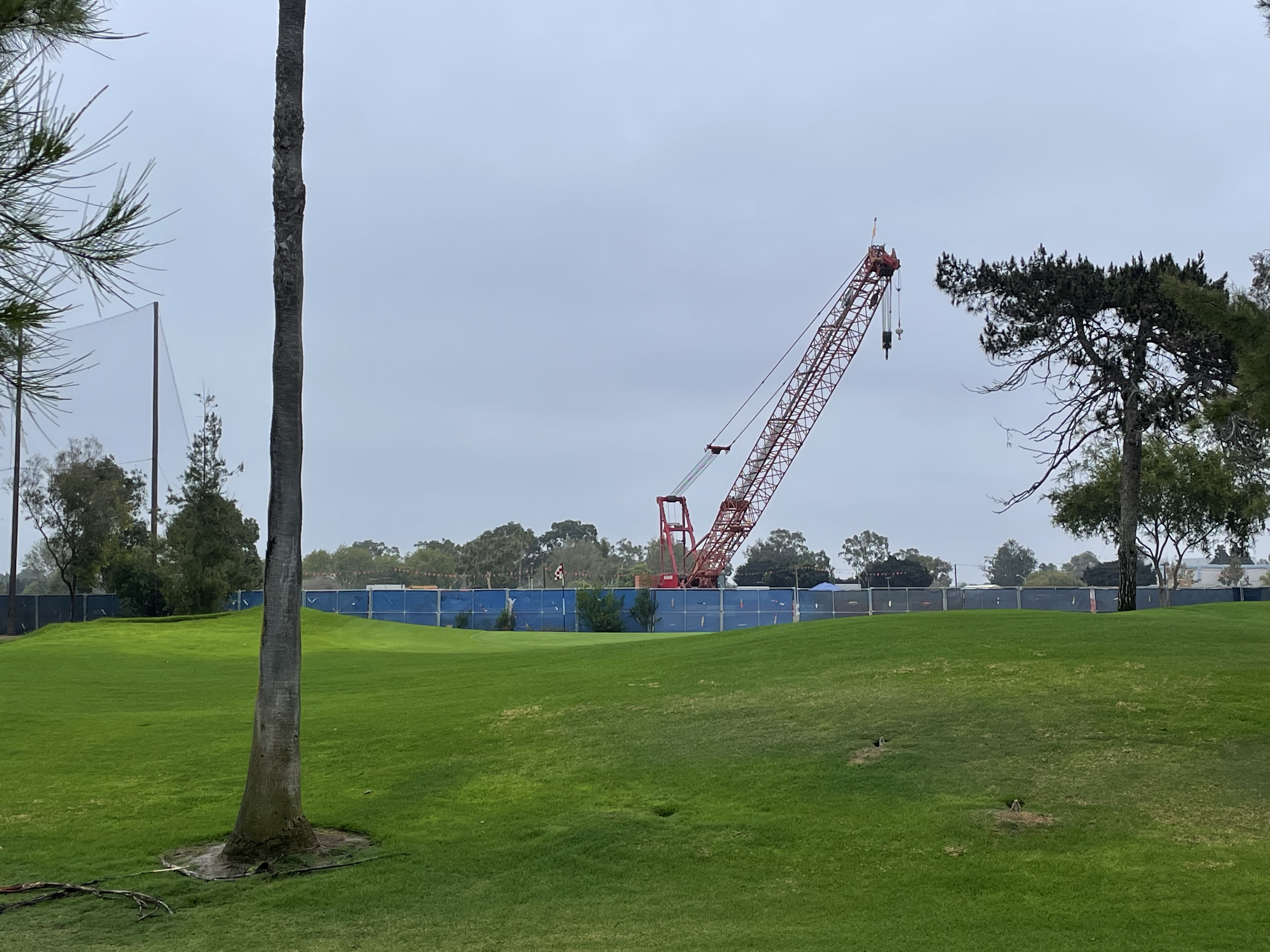
The Fairview site is largely surrounded by the Costa Mesa Municipal Golf Course (Mesa Linda). The proposed Specific Plan includes a secondary access road that would run through a portion of the golf course, approximately 4,650 linear feet in length. This road becomes required under the plan once development density crosses a threshold that is widely expected to be reached given the financial realities of the project.
At the August 10, 2026 Planning Commission hearing, a golf consultant's analysis was discussed. Staff stated the consultant concluded that the affected holes would be reconfigured and relocated rather than permanently eliminated, and that the total number of holes in the course would be maintained. That finding did not satisfy critics. Representatives of the Southern California Golf Association testified at the hearing, along with coaches and golfers, raising concerns about disruption to youth programs, high school and college golf, and the heavy public use the course receives. Their position was that any routing through the course was unacceptable and that the City should exhaust alternatives first.
The primary alternative that drew significant discussion was Merrimac Way, a private roadway that currently runs along the eastern side of the Harbor Village shopping center. Multiple speakers argued that Merrimac Way exists as a historical right-of-way and that a public easement may exist, which would allow it to be used as a secondary access route without touching the golf course. Staff responded that to its knowledge no recorded public easement exists on Merrimac Way. However, the current lease on the corridor expires in December 2036, and the revised Specific Plan now includes language acknowledging that Merrimac Way could serve as an alternative access route if the lease situation changes and negotiations occur. Commissioners also directed Staff to continue exploring a third access option before the City Council hearing.
The golf course road has not been formally approved. The City Council vote on the Specific Plan, tentatively set for September 15, 2026, is the decision point. If adopted as written, the road becomes a binding requirement triggered by density thresholds. If the Council asks for revisions, the Merrimac Way alternative and the timing of road construction could both be revisited before a final plan is adopted.
If you are interested in the broader context of golf courses facing pressure from housing development across Orange County, we have a separate blog that covers this topic in more depth: [link to companion golf course blog].
Money, Cleanup, and Traffic
The cost structure of this project is unlike a conventional development deal. Because the land is state-owned and being transferred for housing as a policy priority, the State is expected to hand over the property at little to no cost. The developer absorbs the site remediation bill in return. Estimates for cleanup costs are based in part on what the State paid to clean up the 15-acre Cal OES parcel in the southwest corner. The Housing Element financial analysis suggests the project only reaches financial viability for a developer at approximately 3,500 units, which indicates the cleanup costs are substantial.
Site contamination is concentrated primarily in the former maintenance yard, which the State is retaining for low-income housing construction, and the former central kitchen, which falls within the housing development area. An updated Phase II environmental report covering the full site had not been completed as of early 2026, leaving some uncertainty about final costs and whether contamination in the maintenance yard area could be migrating toward the housing parcels.
The EIR traffic analysis, now published and reviewed at the August 10 Planning Commission hearing, uses modeling rather than a traditional traffic study because this is a program-level EIR. The Harbor Boulevard and Fair Drive intersection is projected to operate at Level of Service D (LOS D), which is the City's minimum acceptable standard, with project improvements in place. However, the cumulative 2045 analysis shows Harbor/Fair, Placentia Avenue, and Victoria Street all degrading to LOS E, which is below the City's standard. Critics also noted that the traffic model explicitly did not evaluate peak-period congestion during the annual OC Fair or the Huntington Beach Air Show, two events that heavily impact Harbor Boulevard each summer. Commissioners also raised the concern that if a developer uses State Density Bonus Law to add units beyond the plan's base, the traffic analysis could become significantly understated. The EIR identified four categories of significant and unavoidable impacts that remain even after mitigation: air quality, biological resources (the golf course pond area), cultural resources (historic Fairview features), and greenhouse gas emissions.
September 2026 Update: City Council Vote Is Next
The Fairview project has moved through several major milestones since this blog was first published in July 2026. Here is the current sequence of events and what comes next.
A community town hall was held July 23, 2026 at the Norma Hertzog Community Center. The Planning Commission held a study session on July 27, then convened a full public hearing on August 10, 2026 that ran more than four and a half hours. After extensive public comment from approximately 35 residents, commissioners voted 4-2 to forward the Specific Plan and EIR to the City Council. Commissioners Andrade, Harlan, Klepack, and Martinez voted yes. Commissioners Dickson and Zich voted no and moved a substitute motion to delay approval and seek additional State negotiations, additional traffic analysis, and a revised public process. That substitute motion failed 2-4.
The City Council hearing is tentatively set for September 15, 2026. That is the vote that determines whether the Specific Plan, General Plan Amendment, and EIR are formally adopted. If adopted, the State then moves forward with executing a development agreement with the master developer, and the City negotiates its own development agreement. If the Council asks for revisions, the plan goes back for further work.
There is no public ballot referendum or initiative planned. The Council vote is the decision point.
After Council adoption, construction on the housing portion is expected to begin in phases, with full buildout projected over 12 to 20 years, with 18 years identified as the most likely timeline. The Cal OES Emergency Operations Center broke ground in October 2025 on the separate 15-acre southwest parcel and is proceeding on its own schedule, unaffected by the housing approval process.
| July 23, 2026 | Community Townhall, Norma Hertzog Community Center |
|---|---|
| July 27, 2026 | Planning Commission Study Session |
| August 10, 2026 | Planning Commission votes 4-2 to forward Specific Plan to City Council |
| September 15, 2026 (tentative) | City Council hearing on Specific Plan, EIR, and General Plan Amendment |
| TBD | State selects master developer (no application submitted as of Aug 10) |
| TBD | Development agreements executed (State-Developer and City-Developer) |
| TBD | Phase 1 construction begins on housing |
| 12 to 20 years | Projected full buildout (18 years most likely per financial analysis) |
Looking for a Home in Costa Mesa?
The Fairview redevelopment will reshape one of Costa Mesa's largest undeveloped areas over the next two decades. If you are buying, selling, or investing in the Costa Mesa area, understanding what is coming to this neighborhood matters for long-term values and rental demand. We track new development projects across Orange County and can give you a current picture of what is in the pipeline.
Search homes for sale in Costa Mesa | View all OC new developments